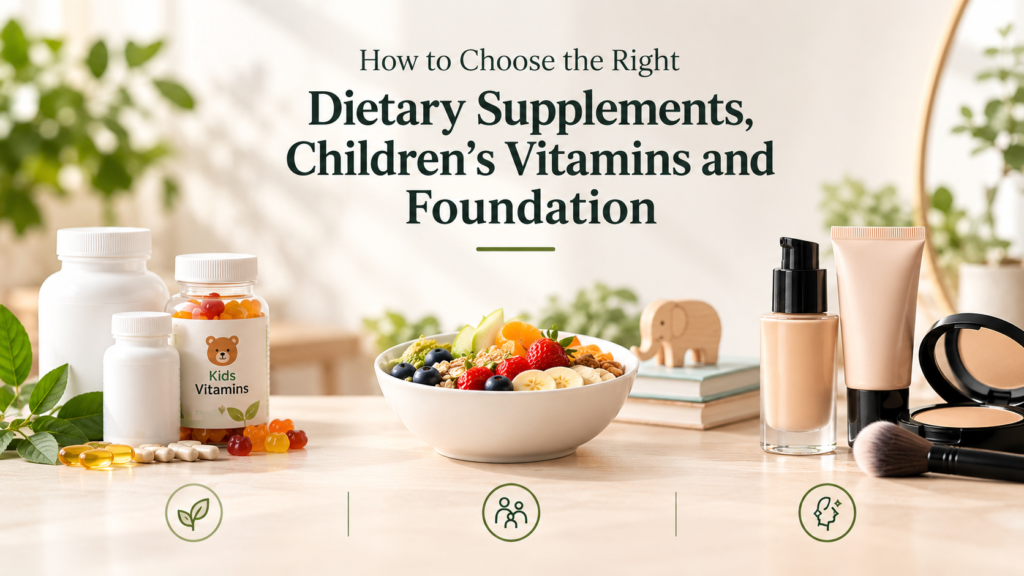

Making the right choices about health and beauty products can sometimes be challenging, especially when there are so many options available. From dietary supplements and children’s vitamins to everyday cosmetics such as foundation, understanding what to look for can help consumers make more informed decisions. Whether you want to support your family’s nutritional needs or find makeup that complements your skin, a little research can make the process easier.
This guide explains how to choose suitable dietary supplements, whether vitamins are necessary when following a healthy diet, and how to find the right foundation for your skin.
1. How to Choose Dietary Supplements or Children’s Vitamins
Dietary supplements can help provide essential nutrients when the body does not receive sufficient amounts through food. They are available in different forms, including tablets, capsules, powders, liquids, and gummies. However, choosing a supplement should involve more than simply selecting a popular product or following advertising recommendations. Just as consumers carefully compare ingredients and quality when purchasing household goods, nutritional products also deserve attention to detail and informed consideration.
Understand Your Nutritional Needs
The first step is identifying which nutrients your body may need. Different people have different nutritional requirements depending on their age, lifestyle, dietary habits, and general health. For example, individuals following vegetarian or vegan diets may need to pay particular attention to vitamin B12, while certain people may require additional vitamin D, iron, or calcium.
Before purchasing a supplement, consider your regular diet and consult a qualified healthcare professional if you suspect a nutritional deficiency. They can recommend appropriate tests and help determine whether supplementation is necessary.
Check the Ingredients and Dosage
Always read the product label carefully. Check the ingredients, recommended serving size, nutritional quantities, expiration date, and usage instructions. Avoid products that promise unrealistic results, such as instant weight loss, guaranteed immunity, or miraculous health improvements.
It is also important to avoid combining several supplements without checking their ingredients, as some products may contain overlapping nutrients. Excessive intake of certain vitamins and minerals can cause unwanted side effects.
Choosing Vitamins for Children
Children have different nutritional requirements from adults because their bodies are continuously growing and developing. However, this does not mean every child needs a daily multivitamin.
A balanced diet containing fruits, vegetables, whole grains, dairy products, eggs, legumes, and other protein sources generally provides most of the nutrients children need. Supplements may be recommended when a child has a restricted diet, a diagnosed deficiency, or a medical condition affecting nutrient absorption.
Parents should always consult a pediatrician before introducing vitamins or dietary supplements into a child’s routine. Pay particular attention to age-specific dosages, product ingredients, and safety instructions. Never assume that a supplement designed for adults is suitable for children.
2. Do You Need Vitamins If You Eat a Healthy Diet?
One of the most common questions about nutrition is whether taking additional vitamins is necessary when someone already follows a healthy and balanced diet.
In most cases, the answer is no. A varied diet containing fresh fruits, vegetables, whole grains, healthy fats, and protein sources can provide the majority of essential vitamins and minerals required by the body.
For example, citrus fruits provide vitamin C, dairy products can supply calcium, leafy vegetables contain several essential micronutrients, and fish can provide vitamin D and omega-3 fatty acids.
However, there are situations in which even people with healthy eating habits may benefit from supplementation. Pregnancy, certain digestive conditions, restrictive diets, limited sun exposure, and specific nutritional deficiencies can increase the need for particular nutrients.
The important point is to understand that supplements are intended to complement a balanced diet, not replace nutritious food or compensate for consistently unhealthy eating habits.
When researching nutritional products, consumers can explore different health and wellness categories and product information through Amway Mongolia. As with any supplement provider, it is important to review individual product ingredients, follow the recommended instructions, and seek professional advice when necessary.
A practical approach is to focus on three things: maintaining a diverse diet, understanding your individual nutritional requirements, and using supplements only when there is a genuine need. This helps prevent unnecessary consumption and encourages healthier long-term habits.
3. How to Choose the Right Foundation for Your Skin
Choosing the right foundation is another important aspect of personal care. A suitable foundation can create a natural-looking complexion, even out skin tone, and provide the desired level of coverage. However, selecting the wrong shade or formula can make makeup look unnatural.
Here are some important factors to consider before purchasing foundation.
Identify Your Skin Type
Start by understanding your skin type. Different foundation formulas are designed for different skin needs.
- Oily skin: Matte or oil-free foundations can help reduce unwanted shine.
- Dry skin: Hydrating or moisturizing foundations may provide a smoother appearance.
- Combination skin: Lightweight formulas with a natural or satin finish can work well.
- Sensitive skin: Look for products with suitable ingredients and minimal potential irritants.
If you have acne-prone skin, consider non-comedogenic products that are less likely to clog pores.
Find Your Correct Shade and Undertone
Your foundation should blend naturally with your skin rather than appearing noticeably lighter or darker. Skin undertones are generally categorized as warm, cool, or neutral.
Warm undertones usually have golden or yellow characteristics, cool undertones may appear pink or reddish, while neutral undertones have a balance of both.
A useful way to find the right shade is to test a small amount along your jawline. Compare different shades in natural daylight and choose the one that blends most naturally with your face and neck.
Choose the Right Coverage and Finish
Foundation products are available in different coverage levels. Light coverage is suitable for people who prefer a natural everyday appearance, medium coverage helps even out skin tone, and full coverage provides more concealment for visible blemishes or discoloration.
You should also consider the finish. Matte foundations provide a less shiny appearance, while dewy foundations create a more radiant look. Natural and satin finishes offer a balance between the two.
Check the Ingredients and Expiration Date
Before purchasing foundation, read the product information and check whether its ingredients suit your skin. If you have sensitive skin, consider testing the product on a small area first. Also, check the expiration date and avoid sharing personal makeup products to maintain good hygiene.
Conclusion
Choosing dietary supplements, children’s vitamins, and foundation does not have to be complicated. The key is understanding individual needs, reading product labels, comparing ingredients, and avoiding decisions based solely on advertising or popularity.
For nutritional products, prioritize a balanced diet and professional guidance before introducing supplements. For children’s vitamins, always consider age-specific requirements and consult a pediatrician. When choosing foundation, focus on your skin type, undertone, preferred coverage, and product ingredients.
Ultimately, informed choices help consumers develop healthier nutritional habits and more effective personal care routines. Taking time to research products before purchasing them is a simple but valuable step toward making better everyday health and beauty decisions.