
Key Takeaways
- A coastal home should be evaluated for its full cost and daily practicality, not only for its appearance or proximity to the beach.
- Flood exposure, insurance availability, drainage, wind exposure, and maintenance needs can vary significantly from one neighborhood to another.
- Waterfront, water-view, and water-access homes offer different benefits, restrictions, and ownership responsibilities.
- Road projects and new construction can improve convenience while also changing traffic, noise, and nearby views.
- A neighborhood scorecard can keep a purchase decision focused on long-term needs.
Buying near the coast in Hampstead, North Carolina, is about more than choosing the prettiest view or the shortest drive to Topsail Island. Buyers should compare the complete ownership experience, including travel patterns, water access, insurance, storm preparation, maintenance, and future development.
For an early look at available properties and community options, Hampstead Homes for Sale provides a current listing search and local area guide from Holman Home Design and Real Estate. The resource covers homes and neighborhood considerations across Hampstead, Topsail Island, Surf City, Holly Ridge, Wilmington, and nearby Coastal North Carolina communities. With local real estate knowledge and firsthand relocation experience, the brand offers useful context for buyers comparing inland, water-access, and Intracoastal Waterway-oriented lifestyles.
Table of Contents
- Why Coastal Buying Requires a Different Review
- Compare Location and Daily Travel
- Look Beyond the Water View
- Review Flood Risk and Insurance
- Estimate Coastal Maintenance Costs
- Study Growth and Infrastructure
- Check Schools, Health Care, and Services
- Build a Neighborhood Scorecard
- Questions to Ask Before an Offer
Why Coastal Buying Requires a Different Review
Hampstead buyers often weigh proximity to the Intracoastal Waterway, marinas, creeks, beaches, and Wilmington against a property’s day-to-day demands. Salt air, high humidity, heavy rain, strong winds, and drainage conditions can affect the home over time. Two similarly priced homes may result in very different ownership budgets if one requires more insurance, more exterior upkeep, or more frequent repairs.
Start with the neighborhood, then narrow the search to individual homes. This approach helps reveal whether a house fits your commute, preferred activities, household needs, and comfort level with coastal maintenance.
Compare Location and Daily Travel
A map can make a neighborhood look convenient, but actual travel time is more useful. Drive the routes to work, schools, grocery stores, medical care, the airport, and the beach during the times you would normally travel. U.S. 17 is a major corridor for Hampstead residents, so conditions on that route may shape everyday routines.
- Test morning, afternoon, and weekend travel times.
- Identify alternate routes if traffic, roadwork, or severe weather affects the primary route.
- Check whether sidewalks, bike routes, lighting, and safe neighborhood entrances matter to your household.
- Consider how often you expect to visit Wilmington, Topsail Island, Camp Lejeune, or other regional destinations.
Look Beyond the Water View
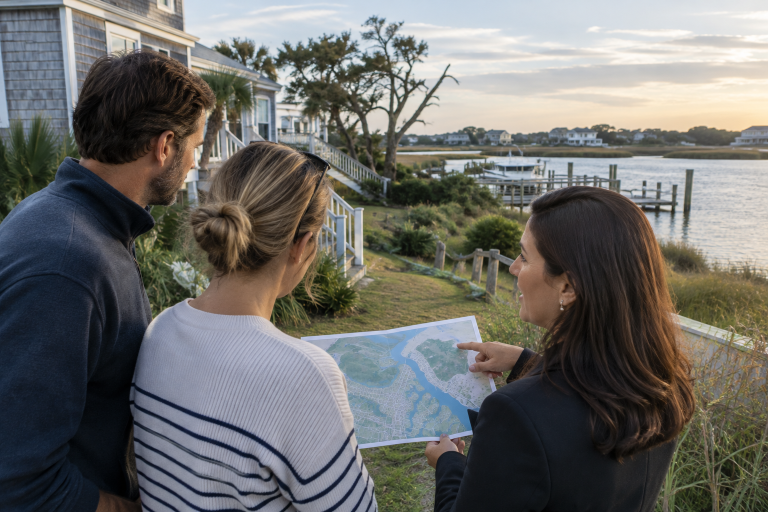
Coastal terminology can sound similar while describing very different ownership experiences. Confirm exactly what is included before assuming a home provides boating or shoreline access.
Understand the distinction
- Direct waterfront: The lot borders a body of water, such as the Intracoastal Waterway, a creek, or a sound.
- Water access: The neighborhood may provide a shared dock, ramp, kayak launch, or designated access point.
- Water view: The home overlooks water but may not include private access rights.
- Beach proximity: The property may be near Topsail Island without being on the water or within walking distance of a public beach access point.
Ask about access easements, dock permits, boat-storage rules, HOA responsibilities, maintenance obligations, and fees. A community dock can be a valuable amenity, but its use may be governed by rules that differ from private ownership.
Review Flood Risk and Insurance
Flood review should be part of due diligence for every coastal purchase. Search the property address through the official flood-hazard information tool, then discuss the results with an insurance professional and your lender. Flood maps can change, and a map designation is only one part of a property’s risk profile.
- Request insurance quotes before the due diligence period ends.
- Ask about prior flooding, water intrusion, storm damage, and repairs.
- Review homeowners, flood, wind, hail, and excess-liability coverage separately.
- Check elevation documents when available, along with grading, drainage paths, crawl space conditions, and road access.
Standard homeowners policies commonly cover certain losses but do not automatically provide flood insurance. Buyers should confirm coverage details directly rather than relying on assumptions or prior owner costs.
Estimate Coastal Maintenance Costs
Coastal homes benefit from consistent preventive maintenance. Exterior surfaces, fasteners, decks, railings, roofing, HVAC equipment, windows, and drainage systems deserve close attention because moisture, salt exposure, and wind-driven rain can accelerate wear.
Request service records, warranties, invoices for major repairs, and documentation of storm-related improvements. A higher-priced home with a newer roof, well-maintained HVAC equipment, durable exterior materials, and a dry crawl space may be easier to budget for than a lower-priced home with deferred work.
Study Growth and Infrastructure
Growth can expand housing choices, retail options, schools, and services, but it can also increase construction activity and alter traffic patterns. Separate approved projects from preliminary proposals, and review county planning materials before assigning value to a future amenity or concern.
Transportation plans deserve special attention. The current Hampstead Bypass construction schedule shows why buyers should consider how long-term road work may affect travel patterns around the U.S. 17 corridor. Ask how a project could change your route, nearby traffic, and neighborhood access during construction and after completion.
Check Schools, Health Care, and Services
Daily services affect both livability and flexibility if household needs change. Confirm school assignments directly with the district, because boundaries and enrollment plans may be updated. Measure the drive times to hospitals, urgent care centers, pharmacies, grocery stores, childcare, parks, and recreation. Remote workers should also verify internet and mobile service at the specific address rather than relying on broad coverage claims.
Build a Neighborhood Scorecard
Score each neighborhood from 1 to 5, then add notes about what drives the score. Give extra weight to factors that matter most to your lifestyle.
- Daily travel: Work, school, shopping, medical care, airport, and beach access.
- Insurance: Flood, wind, homeowners coverage, deductibles, and estimated premiums.
- Storm exposure: Elevation, drainage, wind exposure, trees, and evacuation routes.
- Maintenance: Roof, HVAC, windows, siding, decks, drainage, and crawl space.
- Lifestyle fit: Boating, parks, dining, quiet streets, beach access, and community amenities.
- Future change: Roads, nearby development, construction, services, and potential resale appeal.
Questions to Ask Before an Offer
- What flood zone and elevation information applies to this property?
- What insurance policies and deductibles should be budgeted for?
- Has the home experienced flooding, water intrusion, or storm damage?
- Are docks, ramps, easements, or water access rights shared or private?
- What do HOA fees cover, and are there pending assessments?
- What nearby roads, subdivisions, or commercial projects are approved?
- Which repairs or replacements may be needed within the next five years?
- Would this neighborhood still work if commuting, family, or travel needs changed?
Make the Choice With a Long-Term View
The best Hampstead neighborhood is not automatically the newest, closest to the water, or most scenic. A durable decision balances lifestyle with insurance, maintenance, travel, services, and future change. By comparing those details before making an offer, buyers can choose a Coastal North Carolina home with greater confidence and fewer surprises after closing.